Choosing the Right Graphic Design Agency in Zambia for Your Business


Voxforem Technology
Voxforem Technology is a fast-growing global IT services company with a strong presence in Zambia, the USA, the UK, and India. We specialize in web development, mobile app development, custom software solutions, and digital marketing services helping businesses of all sizes embrace digital transformation.
Let’s Together!Contact Info
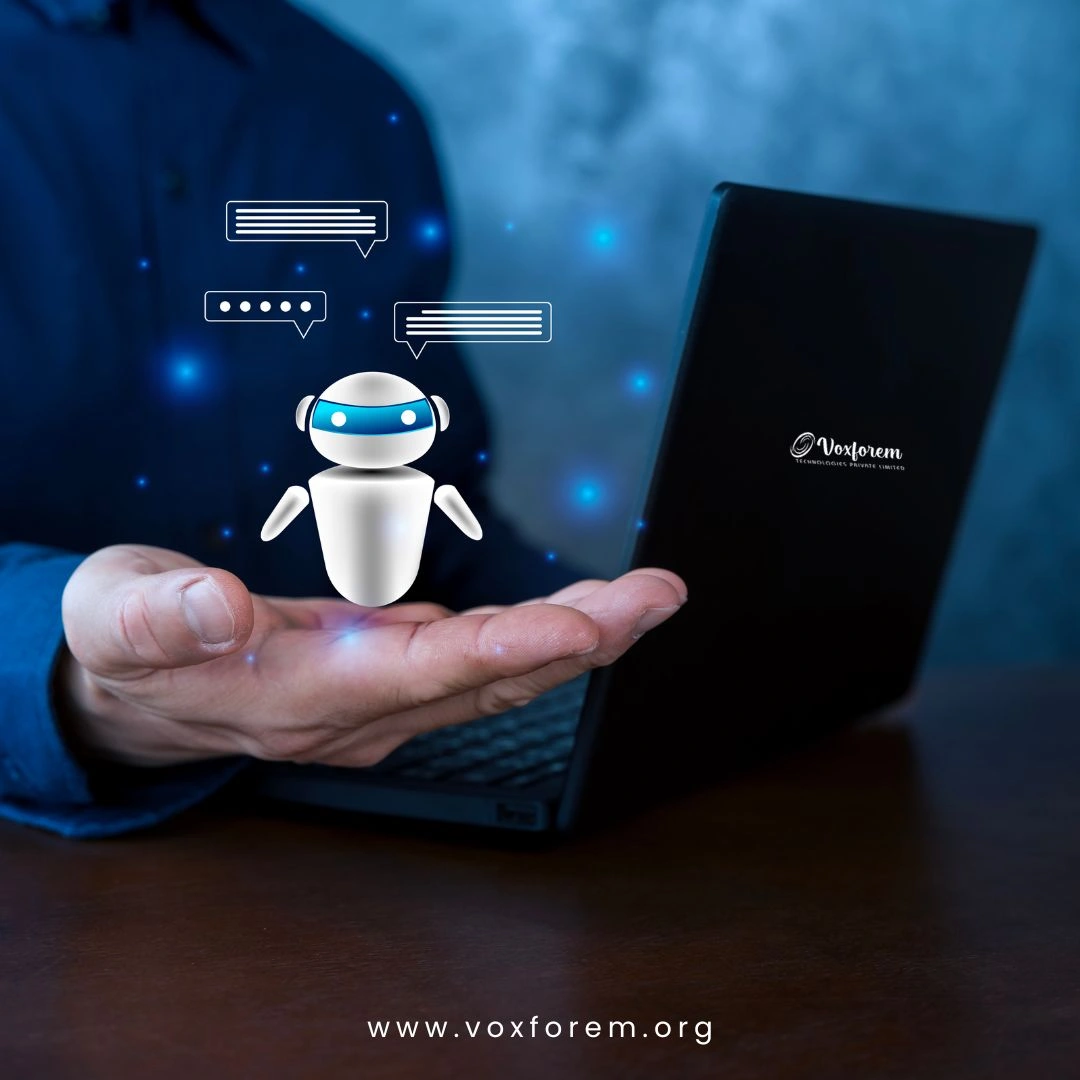
Artificial intelligence has moved from being an interesting technology trend to something businesses are actively using in their day-to-day operations. In 2026, companies are no longer asking only whether they should use AI. Many are now asking a more practical question: Where can AI actually save time and improve the way we work?
For many businesses, the answer lies in AI automation.
AI automation combines artificial intelligence with automated business processes. Instead of employees manually completing every repetitive task, technology can take care of certain parts of the workflow. This might involve sorting customer enquiries, organizing leads, processing documents, preparing reports, or assisting with routine communication.
The important thing is that AI automation isn't about handing everything over to a machine. It's about identifying the tasks that don't need constant human attention and finding a smarter way to handle them.
The term AI automation is often used broadly, but the idea is fairly simple.
Traditional automation works according to instructions that have already been defined. If something happens, the system performs a particular action.
For example, a customer submits a form on a website and automatically receives a confirmation email. There is no real interpretation involved. The system simply follows the rule it was given.
AI changes the picture because it can work with information that isn't always structured or predictable.
Consider a customer who sends an email saying:
"We're looking for software to manage invoices and keep track of our business finances. Can someone explain which solution would be suitable for us?"
An AI-enabled workflow can understand what the customer is asking about, identify the enquiry as a potential sales opportunity, categorize it, and send it to the right team.
An employee can then take over the conversation.
This is where AI and automation become particularly useful. The system handles the repetitive groundwork, while people remain involved in decisions and conversations that require experience or judgment.
Most companies have a long list of small tasks that employees perform repeatedly.
Someone may spend part of every morning checking emails and forwarding them to different departments. Another employee may manually copy customer information from a website into a CRM. A marketing team might spend hours preparing routine reports.
None of these tasks are necessarily difficult. The problem is the time they consume when repeated hundreds or thousands of times.
This is one reason businesses are exploring AI workflow automation.
A well-designed workflow can reduce unnecessary manual work and help employees spend more time on activities that have a greater impact on the business.
Depending on how it is implemented, AI automation can help with:
The value isn't simply in doing things faster. A good automation process should make the entire operation easier to manage.
Think about what happens when a potential customer contacts a business.
In a traditional setup, an employee might read the message, understand what the customer wants, decide which department should handle it, enter the information into a CRM, and then send a response.
With AI workflow automation, several of those steps can happen automatically.
The AI system can read the enquiry and determine whether the person is asking about pricing, technical support, a product, or something else. The information can then be categorized and sent to the appropriate workflow.
For example:
New enquiry → AI reads the message → Request is categorized → CRM is updated → Relevant employee is notified
The employee still plays an important role. They may be the person who speaks with the customer, provides a quotation, or makes the final decision.
The difference is that they aren't wasting time on every administrative step before getting to that point.
There are plenty of areas where AI task automation can be useful. The right opportunities will depend on the type of business and how its teams currently work.
Customer support is one of the most obvious applications.
Businesses receive many questions that are similar or repetitive. AI can help identify common requests and provide initial information to customers.
For more complicated problems, the system can pass the conversation to a member of the support team with a summary of the customer's issue.
This can reduce the workload on support staff without removing the human element from customer service.
Sales teams often receive leads from several sources. Managing these enquiries manually can become difficult as the business grows.
AI can help organize incoming leads and identify what each potential customer is looking for.
For instance, a lead interested in accounting software can be categorized separately from someone looking for custom software development. The information can then be added to the company's CRM and assigned to the appropriate salesperson.
This gives sales teams a clearer picture of their pipeline and reduces time spent on administrative tasks.
Marketing departments are also experimenting with AI automation.
AI can assist with audience segmentation, campaign analysis, content planning, and personalization. Automated workflows can then use this information to trigger specific marketing activities.
For example, a customer who downloads information about a particular service might automatically enter a relevant follow-up campaign.
That said, automation doesn't remove the need for good marketing strategy. Content still needs to sound authentic, campaigns need to be reviewed, and customer communication should feel relevant rather than robotic.
Many businesses deal with invoices, forms, applications, and other documents.
Manually reading and entering information from these documents can be a slow process.
AI can help extract relevant details and prepare the information for use in another system. An employee can then check the result instead of starting the entire process from scratch.
For companies dealing with a high volume of documents, even a small improvement in this area can save considerable time.
Preparing reports is another task that can benefit from automation.
Instead of collecting information from several systems and manually creating a summary every week, a business can automate parts of the reporting process.
AI can help summarize information and highlight changes that may deserve attention.
The final decision should still be made by people who understand the business. The technology simply makes the information easier to review.
It's worth understanding the difference between the two.
Traditional automation is excellent when a process is predictable.
For example:
A customer places an order → An invoice is generated → A confirmation email is sent.
The system knows exactly what to do.
AI becomes more useful when the information entering the system isn't always the same.
For example:
A customer sends a message → AI understands the request → The enquiry is categorized → The appropriate workflow is selected.
This ability to interpret information is one of the main reasons AI is being added to existing automation systems.
In practice, businesses often use both. Traditional automation handles straightforward processes, while AI helps with tasks involving language, documents, and more complex information.
One of the biggest mistakes companies can make is trying to automate everything at once.
A better approach is to start with one process.
Look at the daily work your employees are doing and identify tasks that are repetitive and time-consuming. Perhaps your sales team is manually entering leads, your support staff are answering the same questions, or your marketing team spends too much time preparing routine reports.
Ask yourself:
The last question is particularly important.
Not every task should be fully automated. For sensitive activities involving financial information, legal decisions, or important customer relationships, human approval may still be necessary.
AI automation has clear advantages, but businesses should also approach it carefully.
Companies need to understand what information is being shared with AI systems and how that information is handled.
AI systems can make mistakes. A workflow that automatically sends incorrect information to customers can create more problems than it solves.
A new AI tool is not particularly useful if it doesn't work well with the systems the business already relies on.
Employees are more likely to adopt automation when they understand how it will help them rather than feeling that technology is simply being introduced without explanation.
The next phase of business AI is likely to be less about individual tools and more about connected workflows.
Businesses may have AI working alongside their CRM, accounting software, customer support platform, website, and internal systems.
A customer enquiry could enter through the website, be analyzed by AI, added to the CRM, and routed to the right employee without someone manually moving the information from one system to another.
The same principle can be applied across sales, marketing, customer support, finance, and operations.
This doesn't mean every business needs a complicated AI system. In fact, simple automation that solves a genuine business problem can often be more valuable than an impressive system that nobody really needs.
AI automation is changing how businesses manage daily operations, from customer support and lead management to reporting and document processing. By combining AI and automation with human expertise, businesses can improve efficiency without losing the personal side of their operations.
As AI technology continues to evolve, businesses that adopt practical and well-planned automation strategies can stay competitive, respond faster to customers, and make better use of their resources. The key is to automate the right tasks and use AI where it delivers genuine value.
At Voxforem Technologies, we help businesses explore practical technology solutions that simplify processes, improve productivity, and support long-term digital growth. With the right approach, AI automation can become more than just a technology investment—it can be a valuable part of a business's future growth strategy.